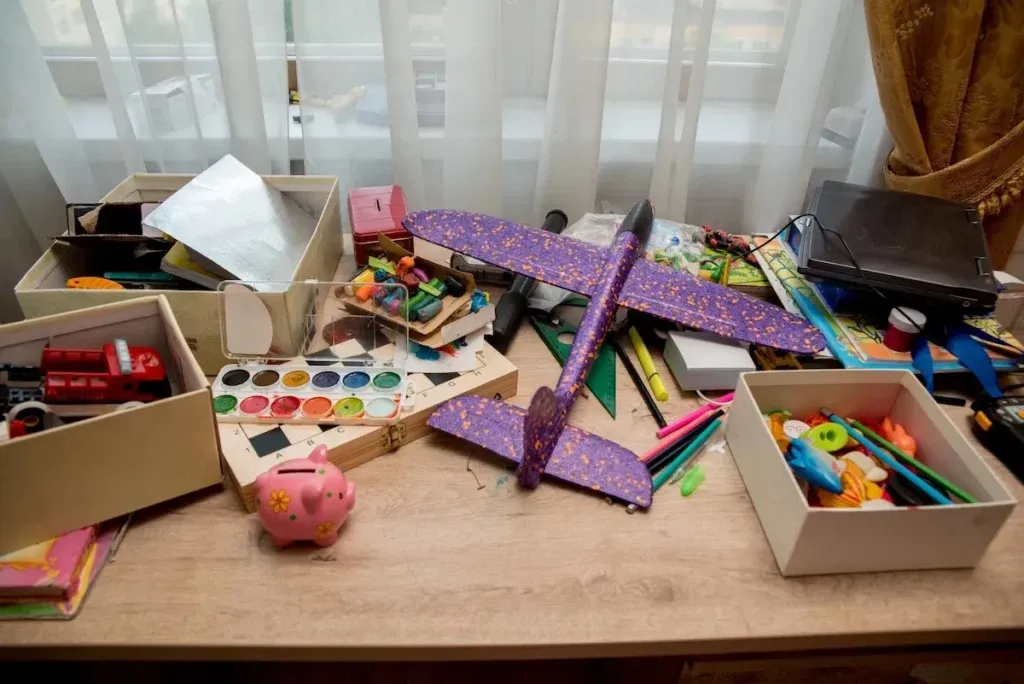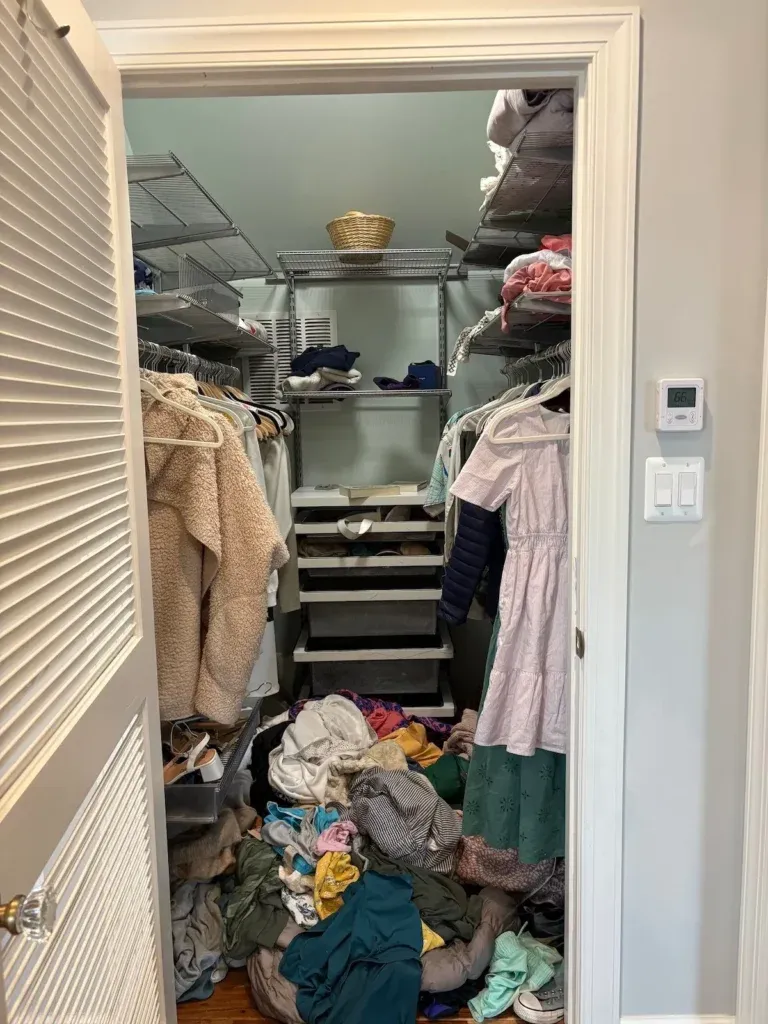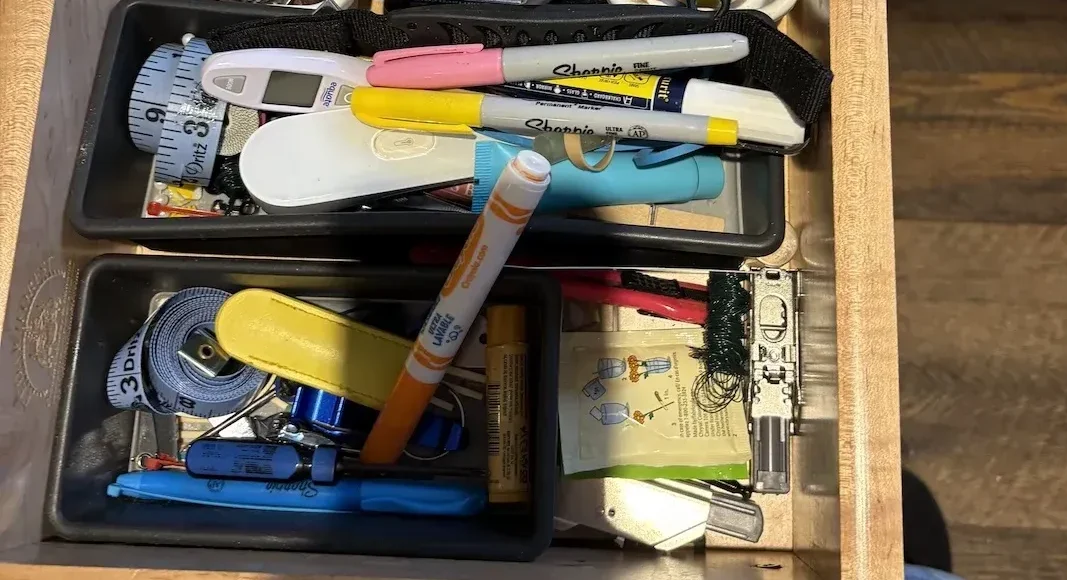
Start with one small, visible area you can finish in an hour, not the whole house — and don’t buy a single bin yet. Decluttering is a series of keep-or-go decisions, and containers only help once those decisions are made. Buy bins last, after you know exactly what’s staying and where it lives.
Almost everyone starts decluttering the same two ways, and both backfire. They either try to do the entire house at once and quit by lunch, or they drive straight to the store, buy a cart full of matching bins, and come home to organize. If you’ve done either, you’re not disorganized. You just started at the wrong end. Here’s the order that actually works.
Where do I start decluttering when the whole house feels overwhelming?
Start small and start visible. Pick one drawer, one shelf, or one corner you can completely finish in under an hour, and don’t move on until it’s done. The reason this works is momentum. When you try to tackle a whole room, you end up with everything pulled out, no clear finish line, and a bigger mess than you started with, so you give up. But finish one junk drawer, and you get a small hit of “I did that” which is what actually carries you to the next spot. Pick the area that annoys you most day to day. That’s the one whose payoff will keep you going.
Why you shouldn’t buy bins first (the mistake almost everyone makes)
This is the one I want to save you from, because it’s the most common and the most expensive. The urge to buy storage first is strong. The bins are cute, the ads are loud, and filling a cart feels like progress. But buying containers before you’ve decided what you’re keeping just moves your clutter into nicer boxes. You haven’t gotten rid of anything. You’ve organized the problem instead of solving it.
This isn’t a fringe opinion — it’s the standard order of operations in this work. Purge everything you’re not keeping, figure out where the keepers actually live, and only then measure your space and buy the exact bins that fit. Do it in that order, and you’ll spend less, because you’ll need far fewer containers than you would have grabbed up front. Bins bought before you decide what to do with them often sit empty in a closet, which is its own kind of clutter.
So the honest rule is simple: containers contain. That’s their job. They can’t make a decision for you, and they can’t be the reason you finally get organized. The decisions come first.
The same sequencing applies in a classroom, where the temptation to buy your way to order is even stronger — I wrote about that in organizing a classroom you didn’t choose.
What to do instead of buying bins
Work with what you already own. You almost certainly have empty boxes, baskets, or bins somewhere in the house, and those are perfect for the sorting stage. Even better, let them act as a limit. If your keep pile doesn’t fit in the space and containers you already have, that’s a signal you’re keeping too much, not that you need to buy more storage.
As you go through an area, decide on every single item in the moment and sort it into three piles: keep, donate, and toss. The point of deciding on the spot is that it stops you from creating a fourth pile, the dreaded “I’ll deal with this later” pile, which is just clutter with a delay on it. Everything gets a home or a way out, right then.
How do I decide what stays? (a simple test)
When you’re stuck on something, borrow the mover’s question: would this be worth taking to a new house? If you were packing to move, would you pay to box this up, load it, and haul it across town? For a lot of things, the honest answer is no, and that “no” is your permission to let it go. The other trap to watch is the word “someday.” Anything you’re keeping for a someday with no date attached is usually just taking up room today.
A realistic first-day plan
Here’s exactly how to run your first session so you actually finish something:
- Pick one small area — a single drawer, one shelf, or one cabinet. Not a whole room.
- Empty it completely so you can see everything you own in that spot.
- Sort every item into three piles: keep, donate, toss. Decide in the moment.
- Clean the empty space while it’s clear — it takes two minutes and it feels great.
- Put back only what you’re keeping, and give each thing a spot.
- Stop. One finished area beats five half-done ones. Come back tomorrow.
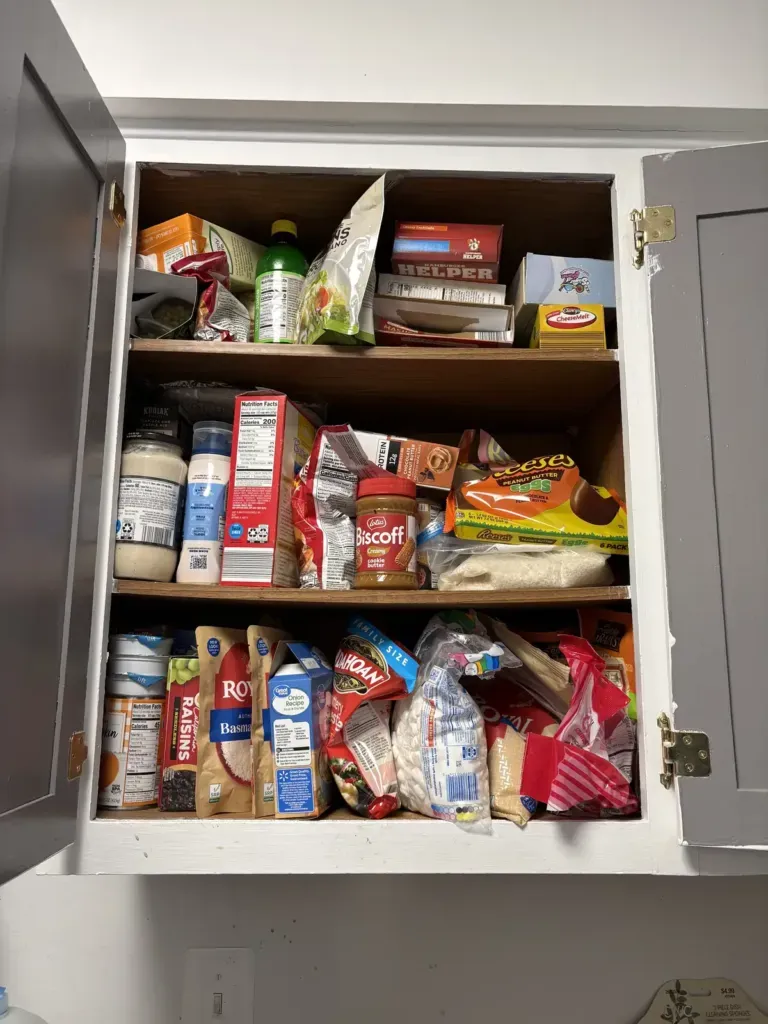
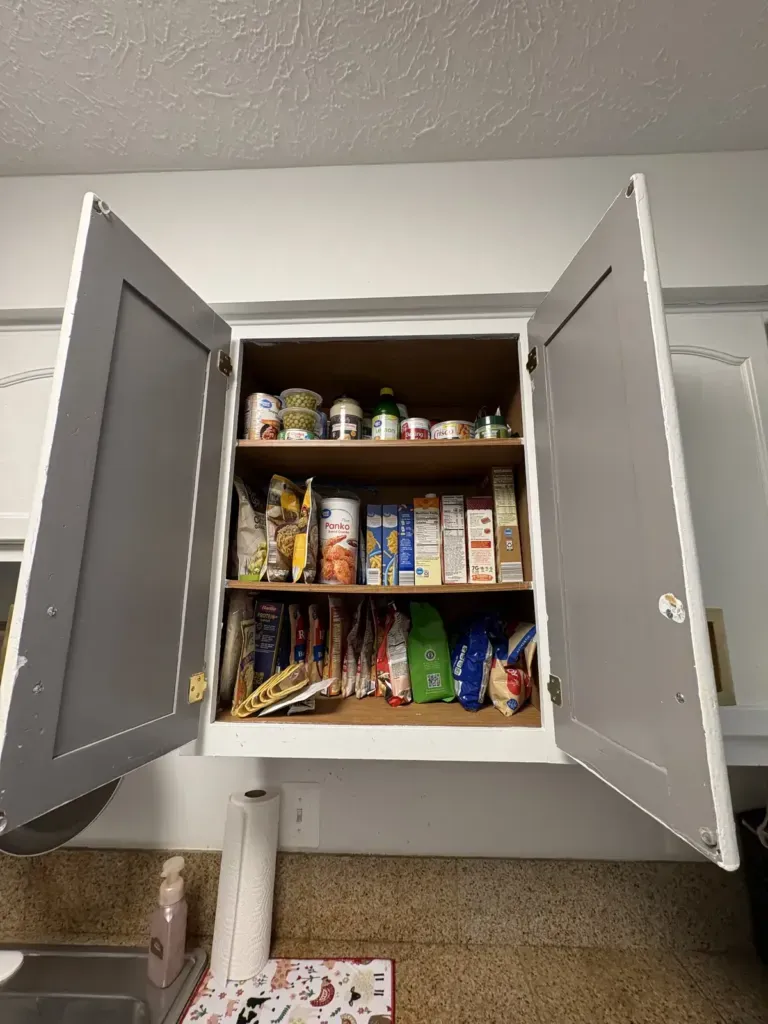
Do that a few times and something clicks. You stop seeing the whole overwhelming house and start seeing a series of small, finishable areas. That shift is what makes decluttering stick, and it’s why I never hand a client a shopping list on day one. If you want to see what a finished small space actually looks like, take a look at my before & after page.
Frequently asked questions
Where should I start decluttering first?
Start with one small area you can completely finish in under an hour, like a single drawer, shelf, or cabinet, rather than a whole room. Pick the spot that bothers you most in daily life, because finishing it gives you a visible win that builds momentum for the next one. Trying to declutter an entire house or room at once usually ends with everything pulled out, no finish line in sight, and the whole project abandoned. Small, finishable wins beat big and overwhelming every time. Once you’ve got a few small wins under your belt, the larger spaces feel far less daunting, and you’ll have built the decision-making habit that makes the rest go faster.
Should I buy storage bins before or after decluttering?
After — always after. Buying bins before you’ve decided what to keep is the single most common decluttering mistake, because it just relocates your clutter into nicer containers without getting rid of anything. Declutter first, decide where your keepers will live, then measure the space and buy only the containers that fit what’s left. You’ll spend less money and end up with far fewer bins than you would have bought up front. Until then, use empty boxes and baskets you already own for sorting, and let your space act as a limit. If your keep pile won’t fit, that’s a sign to cut more, not to buy more storage. Clearing out a playroom? Here’s how to organize kids’ toys before the holidays. And if you’re weighing the cost of bringing in help to do it faster, here’s what a professional organizer actually costs in Virginia.
How do I start decluttering when I feel overwhelmed?
Shrink the task until it no longer feels overwhelming. Instead of “declutter the house” or even “declutter the kitchen,” pick one drawer and set a timer for 20 or 30 minutes. Knowing you have a small, finishable goal and a clear stopping point makes it much easier to start, which is the hardest part. Empty the space, make a keep/donate/toss decision on each item in the moment, put back only what stays, and then stop for the day. The finished result, however small, is what proves to your brain that this is doable. Do that a few times and the overwhelm fades, because you’re no longer facing the whole house at once, just the next small square of it.
If the deciding is the part that stops you, that’s exactly where I help. I bring the hands and the plan, and I keep you moving when you’d rather quit — no judgment, ever. See how my home organizing works, or send me a message for a free quote. You can see real before & after results here, and if you’re weighing the cost of bringing someone in, here’s what a professional organizer actually costs in Virginia. Planning a move? Start with how to declutter before a move.