In Virginia, professional organizers typically charge $50 to $150 per hour, with a three-hour minimum standard. I charge $55 an hour with a three-hour minimum. The range looks confusing because people compare it to an employee’s wage, but a service rate also covers taxes, insurance, supplies, and travel.
I get why the number throws people. You search for “how much does a professional organizer cost,” and the answers range from $30 to $150 an hour, with no explanation of why. So let me lay it out plainly, with real 2026 figures and no vague ranges hiding the ball. This is what the market actually looks like here, what I charge, and where every dollar goes.
How much does a professional organizer cost in Virginia?
Most professional organizers in Virginia charge between $50 and $150 an hour. That’s the service rate reported in Angi’s 2026 cost data, and it matches what I see across the Shenandoah Valley and the wider DC-metro area, where rates run higher the closer you get to Washington. I’m at $55 an hour, which sits at the bottom of that range on purpose. I’m a new business in Winchester, and I’d rather earn your trust than price like I’ve got a ten-year waitlist.
Here’s what that works out to for common projects. These time estimates come from 2026 industry data and assume you’ve done a little light sorting before I arrive. Heavy clutter adds hours.
| Project | Typical time | Estimated cost at $55/hr |
|---|---|---|
| Single closet | 3 hours (my minimum) | $165 |
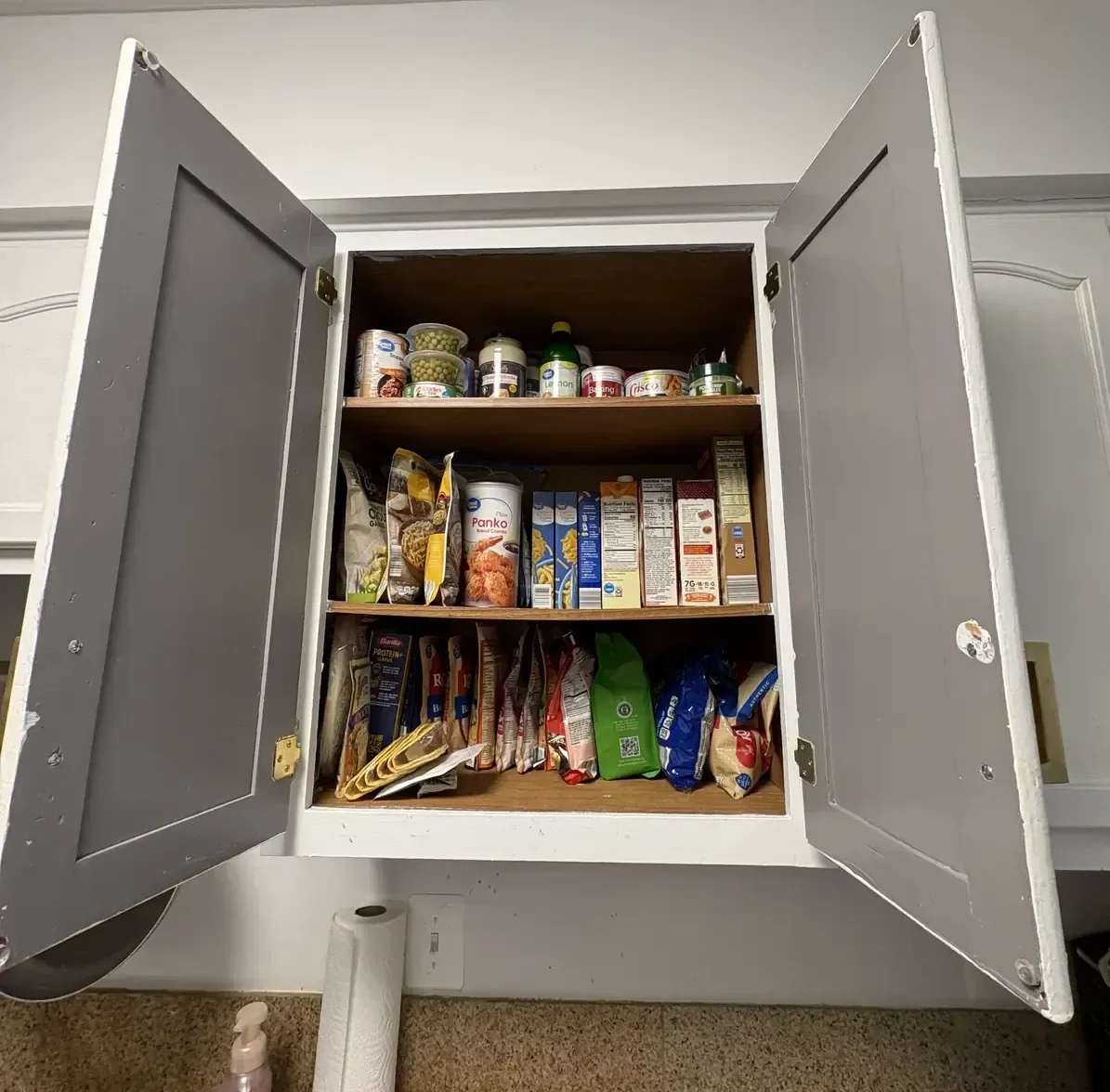
| Pantry | 3–4 hours | $165–$220 |
| Bedroom or home office | 4–8 hours | $220–$440 |
| Kitchen | 6–12 hours | $330–$660 |
| Garage | 8–16 hours | $440–$880 |
| Whole home | Multiple sessions | Custom, planned in advance |
Bigger jobs usually span a few sessions rather than a single marathon day. I’ll give you an honest time estimate before we start, not a surprise at the end. Classroom and teacher spaces are priced the same way — here’s what that job actually looks like.
Why is the price range so wide, $50 to $150 an hour?
This is the part almost nobody explains, and it’s where most of the sticker shock comes from. People compare a professional organizer’s rate to what an organizer earns as an employee, and those are two completely different numbers.
According to ZipRecruiter’s Virginia data from May 2026, a professional organizer in this state earns about $18.68 per hour on average, with most earning between $15 and $20. So when you hear “$55 an hour,” it’s natural to think that’s a huge markup on an $18 job. It isn’t. A wage and a service rate are built differently.
When you hire an independent organizer, the hourly rate has to cover everything an employer would normally pay on top of a wage, plus everything a business owner carries alone. That includes self-employment tax, general liability insurance, mileage and travel time between towns, the hours spent quoting and scheduling that never show up on an invoice, and the simple fact that there’s no paid time off when I’m sick or the work slows down. The rate you see isn’t what I take home. It’s what keeps a real, insured, reliable business running so I actually show up when I say I will.
That’s also why the low end of the market can be a warning sign. An organizer charging $30 an hour is often uninsured, brand-new with no business structure, or quietly making up the difference somewhere you won’t see it until later.
What do I charge, and how does billing work?
$55 an hour, three-hour minimum. That’s it for the base rate. For comparison, Forbes lists the national average for a professional organizer at right around $55 an hour, so I’m charging a Winchester rate that aligns with the middle of the country, not the premium DC rate.
Supplies are billed separately, at cost. If your project needs bins, dividers, or labels, I buy them on your behalf and pass them through at exactly what I paid, as its own line on your invoice. When I pick them up, you get the receipt. The actual one, with the store’s total on it. I don’t mark up a $12 pack of bins to $20 and hope you don’t notice. Shopping and pickup time is billed at my hourly rate, since that’s real time spent on your project, and I’ll always tell you roughly how much shopping a job needs before I do it.
Packing help and home staging are quoted per project rather than hourly because those jobs vary too much to bill by the clock fairly. You’ll get the number before any work starts. You can see the full breakdown of what’s included on my home organizing page.
Why the three-hour minimum? Isn’t that a lot?
Three hours is the standard minimum across the industry, and Angi’s 2026 data lists it right alongside the going rate. There’s a practical reason for it. Real organizing work has a rhythm: we sort and pull everything out, decide what stays, then build the system and put it back. Stopping at the ninety-minute mark usually leaves you with a bigger mess than you started with and no finished result. Three hours is roughly the smallest block where you actually see a room through to done.
Is a professional organizer worth the money?
Honestly, that depends on you, and I’d rather be straight than sell you. If you enjoy organizing, have the free weekends, and just haven’t gotten to it, you may not need me. If you’ve started that closet three times and given up, or you’re staring down a move, or the clutter has crossed from annoying to genuinely stuck, that’s where a set of outside hands and a plan pay for themselves. What you’re really buying is a finished result in a fixed window instead of a project that drags out for months and drifts right back to where it was. If you want to see what that finished result actually looks like, take a look at my before & after page.
Frequently asked questions
How much does a professional organizer cost in Virginia?
Professional organizers in Virginia generally charge $50 to $150 an hour, based on Angi’s 2026 cost data, with a three-hour minimum being standard. I charge $55 an hour with a three-hour minimum, which puts a single closet around $165 and a kitchen in the $330 to $660 range depending on how much is in it. Rates trend higher closer to the DC metro and lower in the Shenandoah Valley. Supplies like bins and labels are billed separately at cost, and larger projects, such as a whole home, are usually planned over several sessions, with an estimate given up front.
Why do organizers charge more per hour than they earn as employees?
Because a service rate and a wage aren’t the same thing. An organizing employee in Virginia earns about $18.68 an hour on average, per ZipRecruiter’s May 2026 data, but that’s take-home pay with an employer covering taxes, insurance, and overhead behind the scenes. An independent organizer’s rate has to cover all of that alone: self-employment tax, liability insurance, travel between towns, unbillable time spent quoting and scheduling, and the lack of any paid time off. The hourly rate isn’t profit in someone’s pocket. It’s what it costs to run an insured, dependable business, which is exactly what you want showing up at your door.
Do I pay extra for the bins and supplies?
Yes, but only at cost, and only for what your project actually needs. If we decide bins, dividers, or labels will help, I buy them on your behalf and add them to your invoice as a separate line at exactly what I paid, receipt included. There’s no markup. Shopping and pickup time is billed at my regular hourly rate since it’s real time on your job, and I’ll always give you a rough idea of how much shopping is involved before I spend a dime. Plenty of projects need very little, because good organizing starts with removing what you don’t use, not buying more containers to store it.