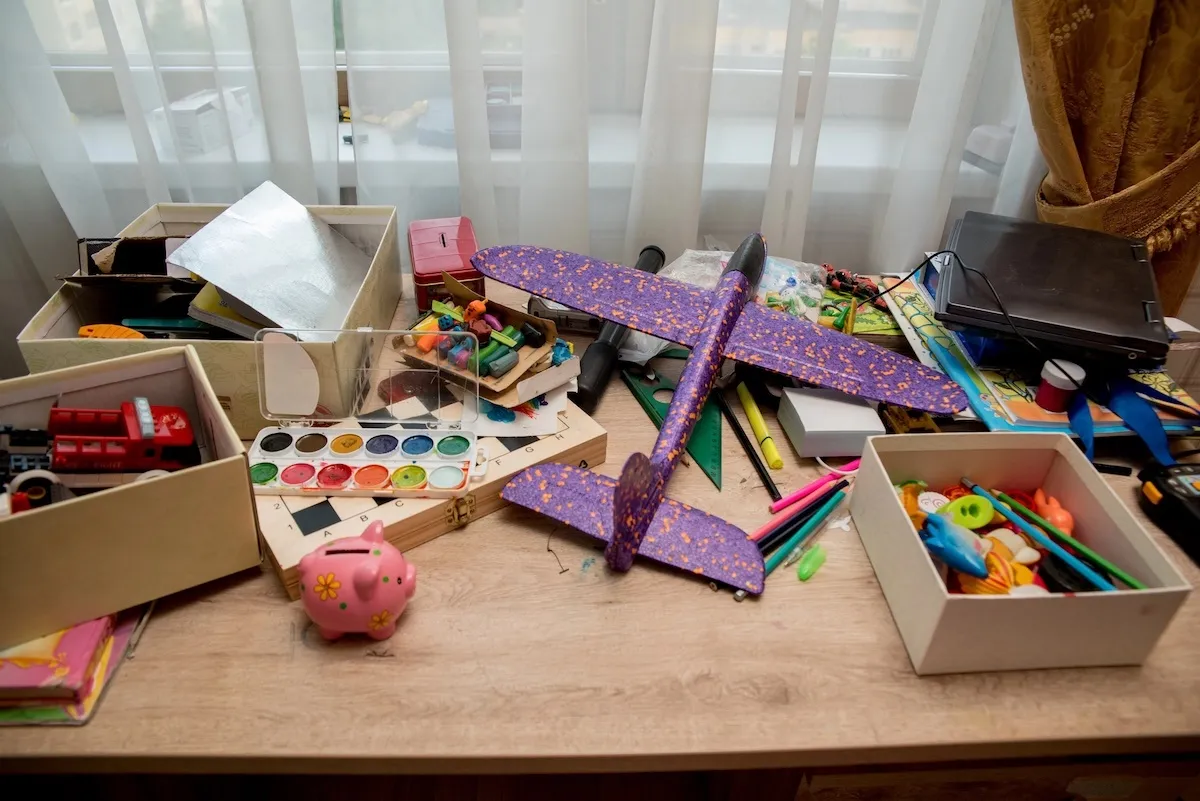
If you’re figuring out how to organize kids’ toys before the holidays, start with timing. Do it in early November, before the gifts arrive. Keep what they actually play with, sort it into a few broad categories, give each category a home your kids can reach, and rotate the extras instead of keeping everything out.
Why should I declutter toys before the holidays instead of after?
Most families do the big toy purge on December 26th. Wrapping paper everywhere, new boxes stacked by the tree, and a playroom that was already full. That’s the worst possible moment to make decisions.
After the holidays, everything is new, and everything is loved. Nobody wants to let go of anything, you included. In early November, the old toys are just old toys. You can see what actually gets used, know how much shelf space you really have, and bring in new stuff to a room that’s ready for it.
There’s research behind keeping fewer toys out, too. In a University of Toledo study published in Infant Behavior and Development (December 2017), researchers watched 36 toddlers, ages 18 to 30 months, play in a room with 4 toys and again with 16. With 4 toys, the kids stayed with each one longer. As the researchers put it, “When there were fewer toys, they played with them in more ways.”
How many toys does a kid actually need?
There’s no magic number, and anyone who gives you one is guessing. The Toledo study wasn’t about a toy count. It showed that fewer toys out at one time leads to deeper play.
A simpler test: Can your kid put everything that’s out away in about ten minutes, with a little help? If not, there’s too much out. That doesn’t mean you have to get rid of it. It means some of it belongs in rotation, which I’ll get to below.
How do I decide which toys to keep?
Pull everything into one spot first. Every bin, every basket, the stuff under the couch. You can’t make good calls on a playroom you can only see half of. Then sort into four piles:
| Pile | What goes in it | What to do with it |
|---|---|---|
| Keep out | Favorites and anything played with in the last few weeks | Give it a home at kid height |
| Rotate | Good toys that just aren’t getting used right now | Bin it, label it, store it out of sight |
| Donate | Outgrown toys, duplicates, and complete toys nobody’s touched in months | Bag it and get it out of the house the same day |
| Toss | Broken toys, missing pieces, dried-out markers, fast-food freebies | Trash or recycle it right away |
The donate pile is the one that sneaks back in. If it sits in the hallway for a week, half of it ends up back in the playroom. Load it in the car before you call it done.
How do I organize toys so kids can put them away themselves?
A playroom only stays organized if the kids can reset it without you. That means the system has to be simple enough for a preschooler.
-
- Use broad categories. Cars, blocks, dolls, art, books. A four-year-old can follow five categories. Not fifteen.
-
- Store at kid height. Put anything they’re allowed to use on their own where they can reach it. Paint, glitter, and anything with a hundred tiny pieces goes up high.
-
- Label with pictures. Kids who can’t read yet can still match a picture of a car to the bin of cars.
-
- Skip the lids. Open bins get used. Lidded bins turn into dumping grounds, because one extra step is one step too many when you’re three.
-
- Buy containers last. Sort first, then measure what’s left. I wrote a whole post on why you shouldn’t buy bins before you declutter, and playrooms are where that mistake costs the most.
Does toy rotation actually work?
For younger kids, it’s the easiest way to keep fewer toys out without giving anything away. Here’s the setup:
-
- Split your rotation pile into three or four bins, each with a mix of toy types.
-
- Store them out of sight. A closet shelf or the garage works.
-
- Every few weeks, or whenever the kids seem bored, swap one bin out for another.
Toys that come back after a few weeks away feel new again. It works best with preschoolers. Older kids usually want a few things available all the time, so let them name their keepers and rotate the rest.
What does a real playroom reset look like?
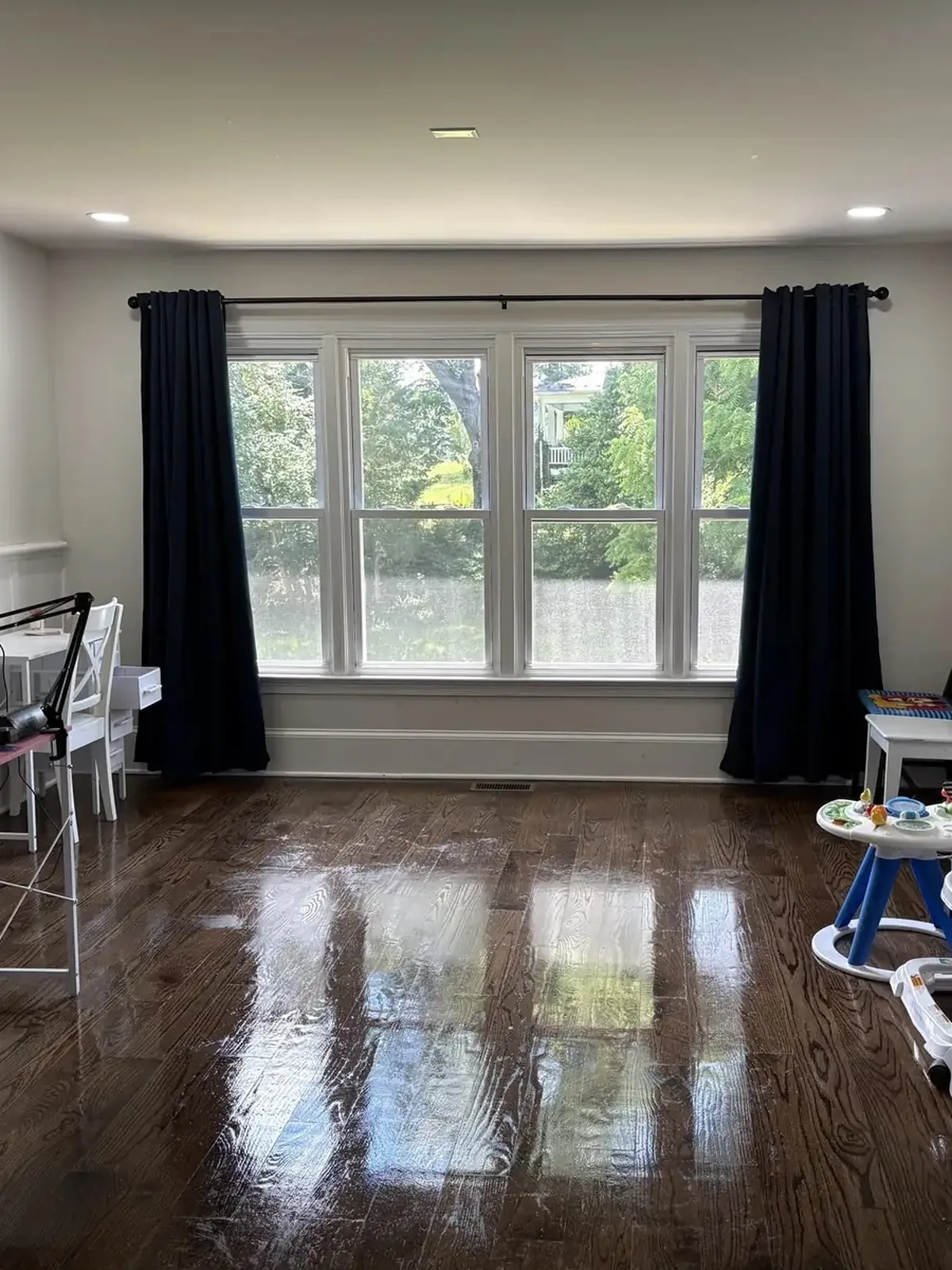
Here’s one I did in Front Royal. The parent was overwhelmed, and with preschool-age kids at home, I understood why. Toys and scraps covered the floor. There were loose cords, food wrappers, and baby gear everywhere. The curtains were drawn, and there was nowhere safe to set a baby down.
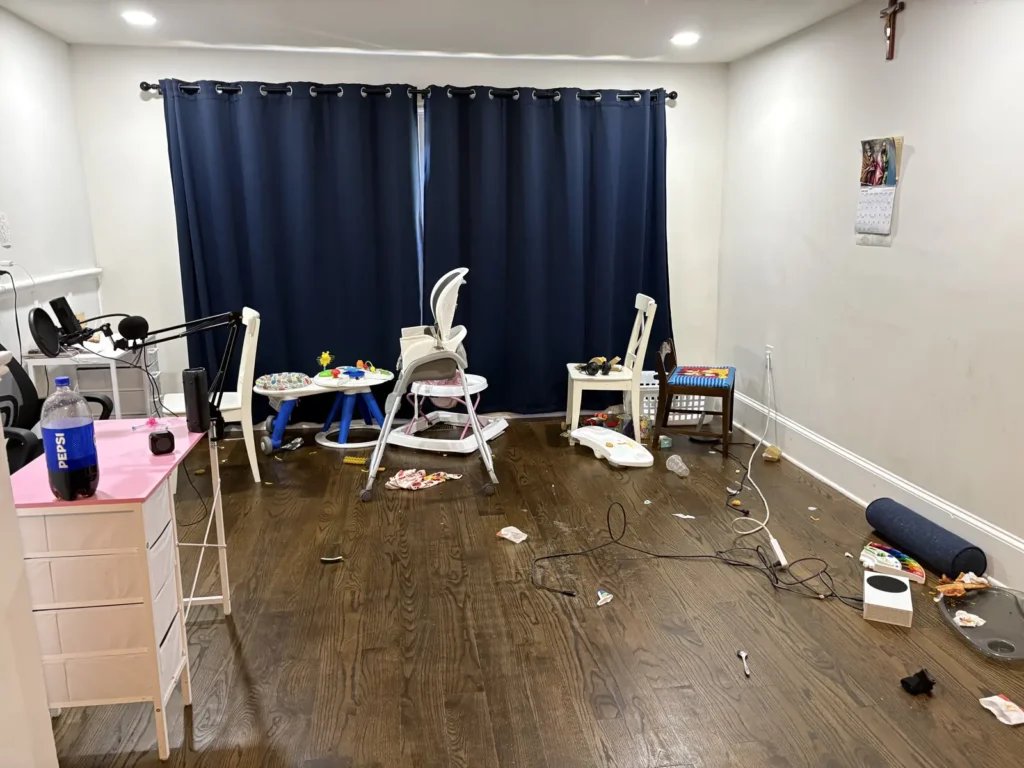
I was there for six hours total. The playroom was one part of it, and I organized and cleaned other areas of the house too. I cleaned as I went, so by the time everything was back in place, the spaces underneath were clean too.
When I left, the floor was clear, the baby gear was lined up along the wall, and the curtain was pulled back. Same room, twice the light. The parent was thrilled. You can see more of my work on the before-and-after page.
Where can I donate used toys in Winchester?
One thing to know first: Toys for Tots collects new, unwrapped toys only. Used toys don’t go in those boxes.
For used toys, Blue Ridge Care thrift shops (formerly Blue Ridge Hospice) accept toys at every location. Drop-off is at the back door, 10 a.m. to 4 p.m., seven days a week. They don’t take cribs or car seats, so you’ll need another plan for those.
| Town | Blue Ridge Care thrift shop address |
|---|---|
| Winchester | 116 Featherbed Lane |
| Winchester (East) | 808 Berryville Avenue |
| Front Royal | 425 South Street |
| Strasburg | 390 East King Street |
| Berryville | 115 West Main Street |
| Leesburg | 57 Catoctin Circle NE |
Hours and rules can change, so check their site before you load the car.
Toy decluttering questions parents ask
Should my kids help declutter their toys?
It depends on their age. Preschoolers usually have a hard time letting go when every toy is in front of them, so do the first big sort yourself and keep it low-key. Put the donation bags in the car instead of announcing it. With older kids, involve them. Give them a clear limit, like “everything has to fit on these two shelves,” and let them choose what stays. They’ll keep the system up better when they have a say in it. For any age, don’t present it as a punishment. It’s making room. Doing it before the holidays helps, because “we’re clearing space for new things” is an easy sell in November.
How often should I declutter toys?
Twice a year works for most families: once before the holidays and once before birthdays, since those are the two times new toys flood in. In between, a quick weekly reset keeps it manageable. Ten minutes, everything back in its bin, and anything broken goes in the trash. If you use toy rotation, the swap is a natural time to check what’s still getting played with. A toy that’s come out of storage twice and been ignored both times is ready for the donate pile. The goal isn’t a perfect playroom. It’s one your kids can clean up on their own.
What do I do with toys from grandparents I don’t have room for?
Keep the relationship and lose the guilt. A gift has done its job once it’s been given and enjoyed. A few options that work: put bigger gifts straight into rotation so they get played with in turns, keep one or two at Grandma’s house for visits, or snap a photo of your kid playing with it and send it along before it moves on. If the same thing keeps happening, it’s fair to suggest experiences instead, like a zoo trip, a class, or a day out together. Most grandparents just want the time with the kids anyway. And if it’s something they’ll ask about, keep that one.
Want help getting the playroom ready before the holidays?
If you’d rather not do it alone, I’m booking November playroom resets now. I work in Winchester, Front Royal, Strasburg, Berryville, Leesburg, and Martinsburg. My home organizing rate is $55 an hour with a 3-hour minimum, and you can read exactly how I bill in what a professional organizer costs in Virginia. If closets are next on your list, here’s how I organize a small closet.
Send me a message to book, and I’ll get back to you.