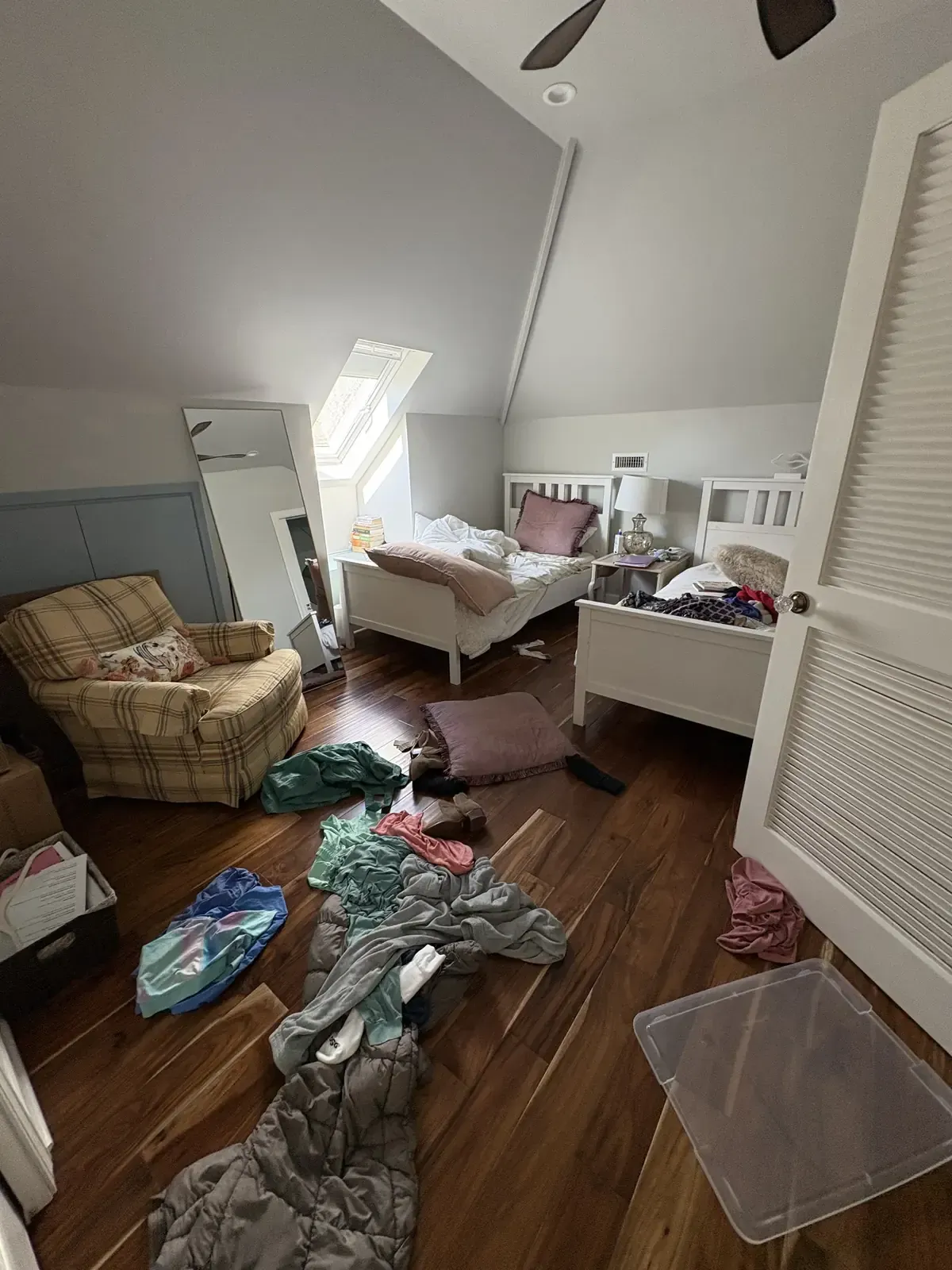
Start decluttering six to eight weeks before your move, one room at a time, and work storage areas first. The goal is simple: don’t pay to move things you’ll never unpack. Long-distance movers charge by weight, so every box you cut is money saved. Sort as you go into keep, donate, sell, and toss.
A move is the one time life hands you a clean reason to deal with everything you own. You’re touching every item in the house anyway. You might as well decide, while it’s in your hands, whether it’s coming with you or not. Do that well, and you pack less, pay less, and unpack into a place that already feels lighter. Here’s how I’d walk through it, room by room.
How do I start decluttering before a move?
Start early and go one room at a time. The biggest mistake people make is waiting until the week of the move, then trying to sort and pack at the same time under a deadline. That’s when everything just gets shoved in a box “to deal with later,” and later never comes. Give yourself six to eight weeks if you can. Pick one room, one closet, or even one drawer per session, and never handle the same item twice. When you pick something up, decide its fate right then: keep, donate, sell, or toss. Put it in the right pile and move on.
When should I start decluttering before moving?
Work backward from your moving day.
| When | What to tackle |
|---|---|
| 8 weeks out | Storage areas first — attic, basement, garage, spare closets. Most forgotten stuff, longest to sort. |
| 6 weeks out | Bedrooms and living areas — clothes, books, decor, electronics. |
| 4 weeks out | Kitchen and bathrooms — expired food, duplicate gadgets, old toiletries. |
| 2 weeks out | Final sweep. Anything not packed by now gets donated, sold, or tossed. |
| Moving week | Schedule a donation pickup or drop-off for the whole “get rid of” pile. No new decisions. |
The reason to start with storage areas is that they hold the things you’ve already half-forgotten, which makes the decisions easier. You warm up on the boxes you barely remember before you get to the sentimental stuff.
How do I decide what to keep? (The rule I actually use)
When you’re stuck on an item, use the 90/90 rule from The Minimalists: if you haven’t used it in the last 90 days and can’t picture using it in the next 90, it probably doesn’t need to come with you.
For everything you’re not keeping, there are really only three exits, and picking the right one saves you time:
- Donate — the fastest path for clothes, household goods, books, and small furniture in decent shape. Many charities will even pick up larger items. Keep the receipt if you itemize on taxes.
- Sell — worth it only for higher-value things where the payoff beats the effort. Selling is slower than donating, and anything that doesn’t move quickly tends to drag on and follow you to the new place anyway.
- Toss or recycle — for what’s broken, expired, or truly done. Electronics, paper, and glass usually have their own drop-off spots.
My honest advice: donate more than you think you should, and only sell the few things genuinely worth the hassle. People lose weeks trying to sell a $15 lamp.
Room by room: what to cut in each
Here’s where I’d focus in each space. You don’t have to be ruthless everywhere. You just have to make a decision on each thing instead of moving it by default.
Closets and bedrooms. This is usually the biggest win. Pull everything you haven’t worn in a year. Duplicates, wrong sizes, the “someday” pile. A closet is also the place where you can actually see the payoff, which is motivating when the rest of the house feels overwhelming — you can see a few real before-and-after closet transformations here.
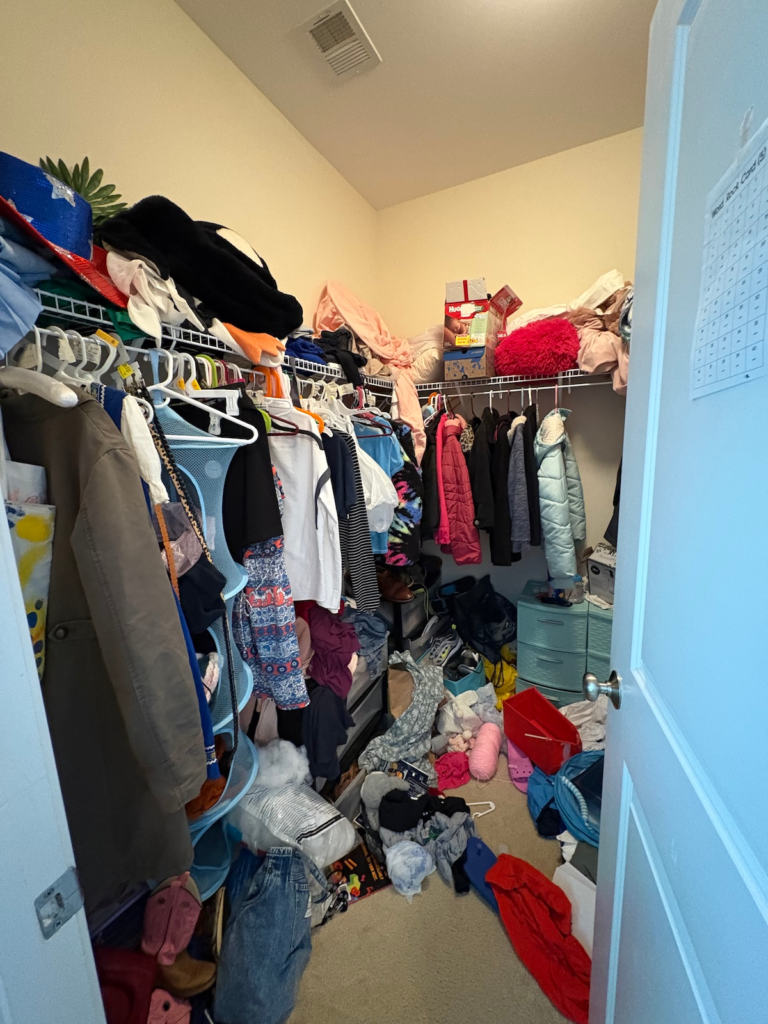
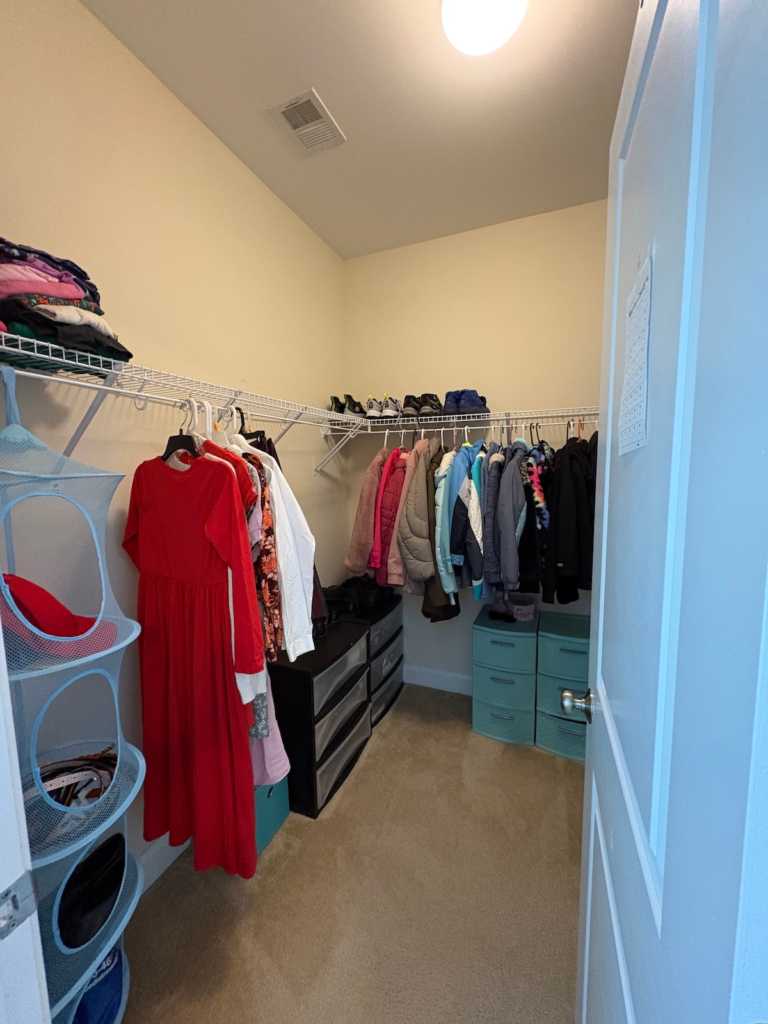
Kitchen. Toss anything expired, then hunt duplicates — you don’t need three spatulas or the gadget you used once. Small appliances you never reach for are prime candidates for donation.
Bathrooms. Old toiletries, expired medications, hotel bottles you’ve been hoarding, makeup past its prime. Bathrooms declutter fast because most of it is genuinely used up.
Living areas. Books and DVDs you won’t reopen, decor that no longer feels like you, and the mystery-cord drawer every home has. Keep the keepsakes that matter, let the rest go.
Storage, garage, and sheds. The “just in case” zone. Whole boxes labeled “miscellaneous” that have moved with you twice and never been opened. Keep a small real-emergency kit — flashlight, basic tools, tape, a charger — and be honest about the rest.
Why decluttering before a move saves real money
This is the part that turns decluttering from a chore into a paycheck. Moving isn’t cheap. In 2026, a local move averages somewhere around $800 to $2,500, and a long-distance move routinely runs past $5,000, depending on how much you’re hauling and how far.
Here’s the piece most people miss: long-distance movers price by weight. They literally weigh your shipment. Movers charge roughly $0.50 to $0.80 per pound, so a hundred pounds you don’t need costs you real money before the truck even leaves. So every heavy box of stuff you’ll never unpack is a line on that bill. The old treadmill, the cases of “just in case,” the furniture that won’t fit the new place — you pay to load it, drive it, and unload it, and then it sits in the new garage exactly like it sat in the old one. I’ve watched people pack a box, and you can tell by the way they seal it fast and don’t look inside that it’s going to get moved, stored, and never opened again. Cutting that box before the truck comes is the cheapest money you’ll save all move. If you’d rather not do the packing part alone once you’ve sorted, that’s exactly what my packing and moving help is for.
When it’s worth bringing in help
If you’ve got the weeks and the energy, a pre-move declutter is very doable on your own. Where people get stuck is time and decision fatigue — when there’s a hard moving date bearing down and the whole house still needs sorting. That’s what I help with: I bring the hands and the plan, we work through it room by room, and I keep things moving when you’d rather give up and just box it all. I also handle the packing and can put together a custom moving checklist so nothing slips through the cracks. Honest note, since I’m still building this business: I’m not going to tell you I’ve packed a thousand houses. What I bring is a clear process, a steady pace, and someone who won’t let you re-litigate the same sweater three times.
Frequently asked questions
How far in advance should I declutter before moving?
Start six to eight weeks before your moving day if you can. Beginning that early lets you work one room at a time without the pressure of a looming deadline, and it gives you room to donate, sell, or recycle things properly instead of panic-boxing everything the final week. Start with storage areas like the attic, garage, and spare closets, since those hold the most forgotten items and take the longest to sort. Then move through bedrooms and living spaces, then the kitchen and bathrooms, saving a final sweep for two weeks out. If you’re closer to your move than that, don’t panic — just work fastest on the rooms with the most to cut.
What should I get rid of before a move?
Start with the easy wins: anything broken, expired, or duplicated, then anything you haven’t used in the past year. A useful test is the 90/90 rule — if you haven’t used something in 90 days and can’t see using it in the next 90, it probably doesn’t need to move with you. Common regrets people mention after a move are the “just in case” boxes they never opened, old electronics, duplicate kitchen gadgets, clothes that don’t fit, and furniture that won’t work in the new place. Donate what’s in good shape, sell only the higher-value things worth the effort, and toss or recycle the rest. Less to move means a smaller, cheaper, faster moving day.
Should I buy bins and boxes before I start decluttering?
Not yet. It’s tempting to buy a stack of bins and start filling them, but that just relocates your clutter into nicer containers. Sort and purge first — decide what’s actually coming with you — and only then buy packing supplies for what’s left. You’ll almost always need fewer boxes than you’d have bought up front, which saves money and space in the truck. Buying containers before you’ve made your keep-or-go decisions is one of the most common decluttering mistakes, and it’s the whole reason I tell clients to hold off on the shopping trip until we know what we’re actually keeping. And if you’re weighing the full cost of bringing someone in to help, here’s what a professional organizer actually costs in Virginia. If your move is really a full downsizing job — clearing out a family home or a lifetime of belongings — that’s a bigger lift, and my estate & downsizing help is built for exactly that.
Moving soon and staring down a house full of decisions? I can help. See how my packing and moving help works, or send me a message for a free quote and I’ll give you an honest estimate before anything starts. You can see real before-and-after results on my before & after page, and if you’re weighing the whole cost of bringing someone in, here’s what a professional organizer actually costs in Virginia.